Home › 3rd grade › Math › Spanish Multiplication Properties
Spanish Multiplication Properties
Propiedades de la multiplicación
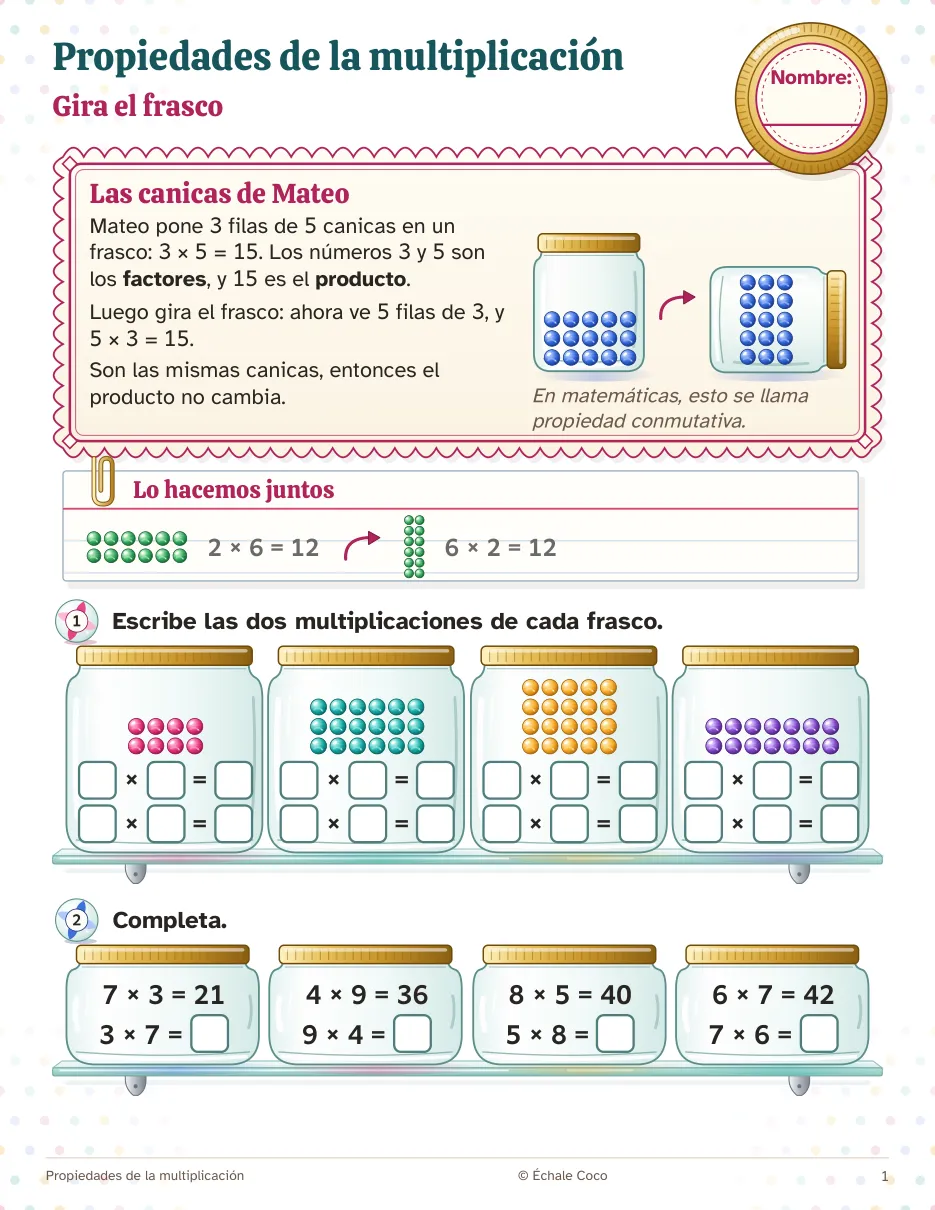
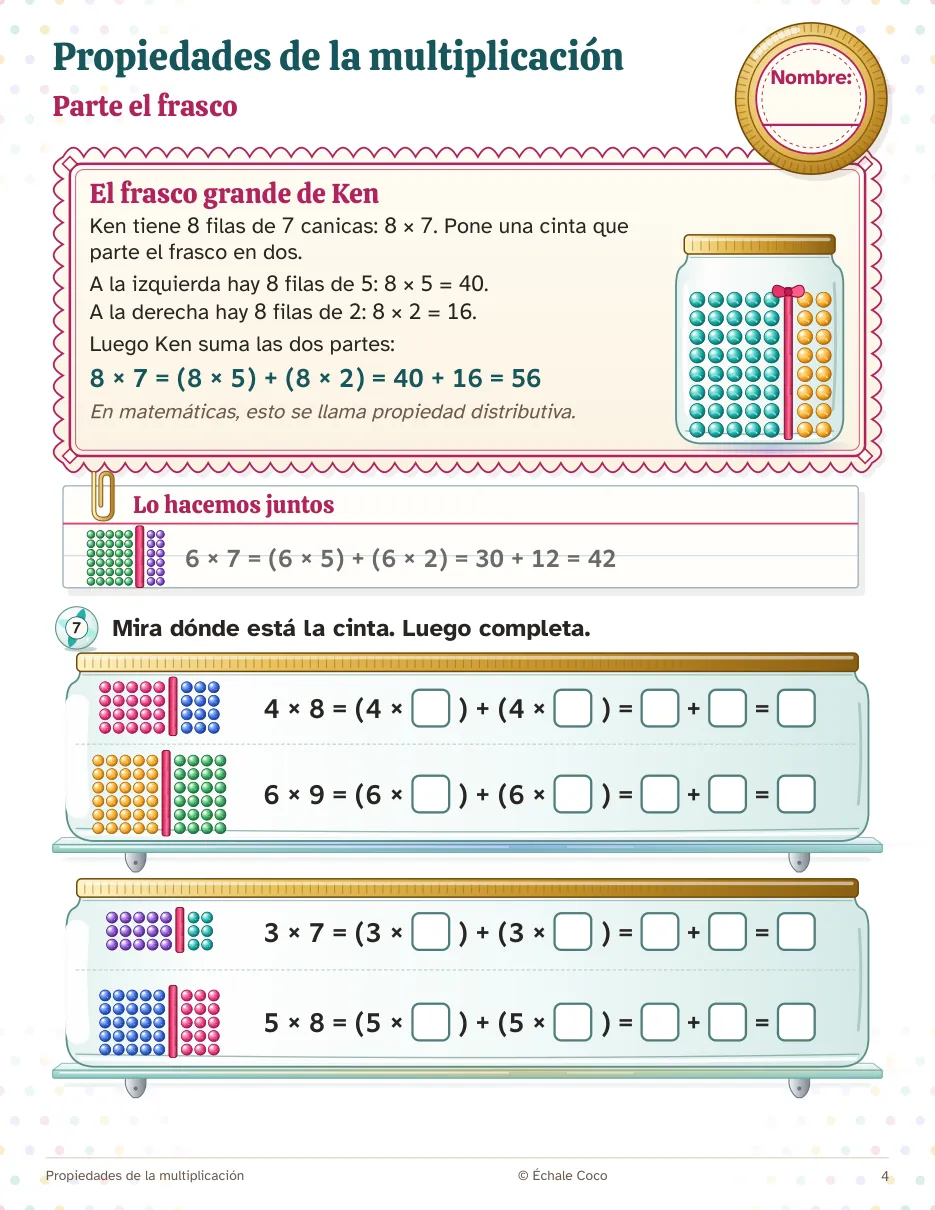
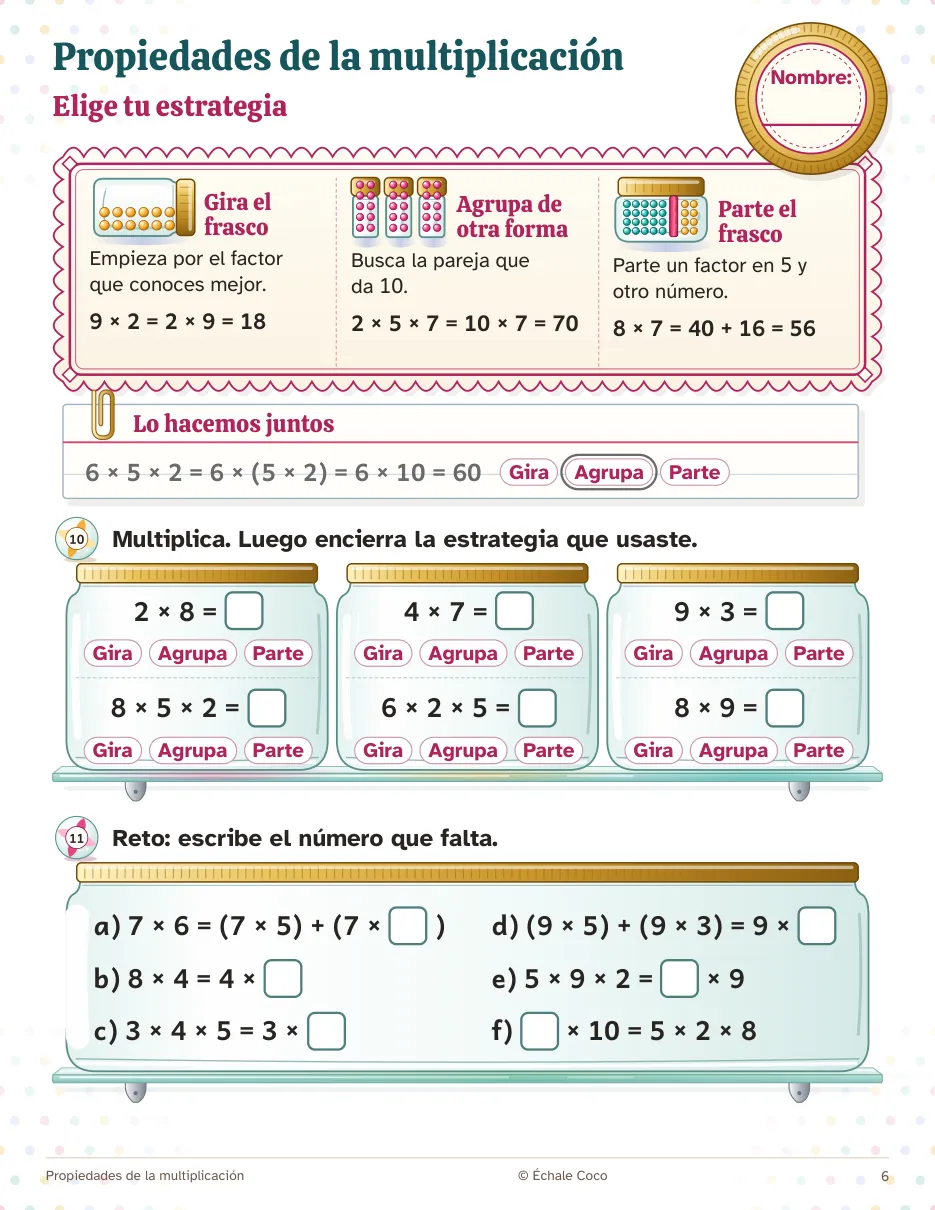
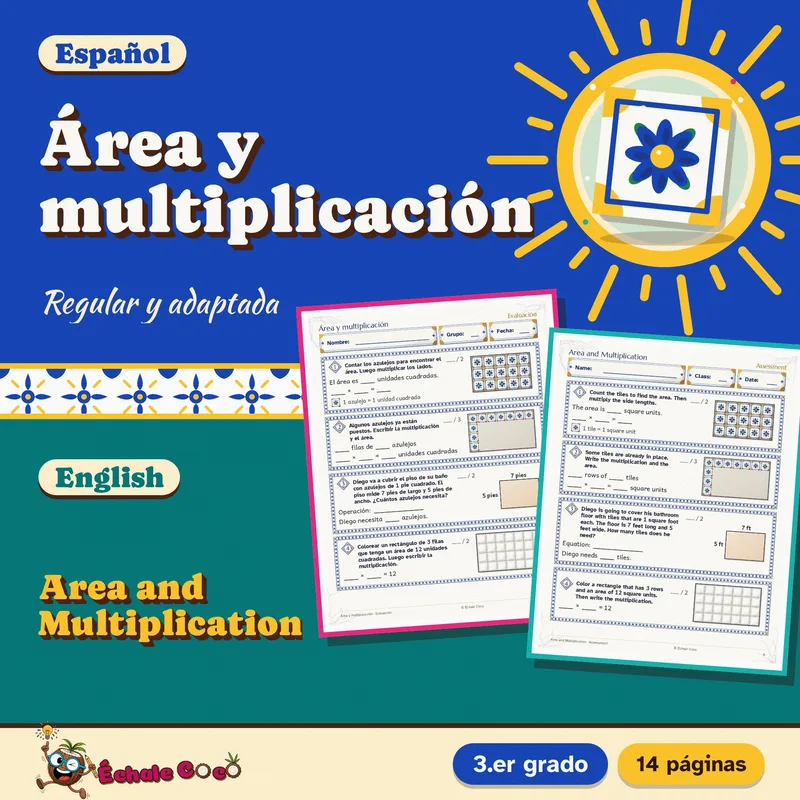
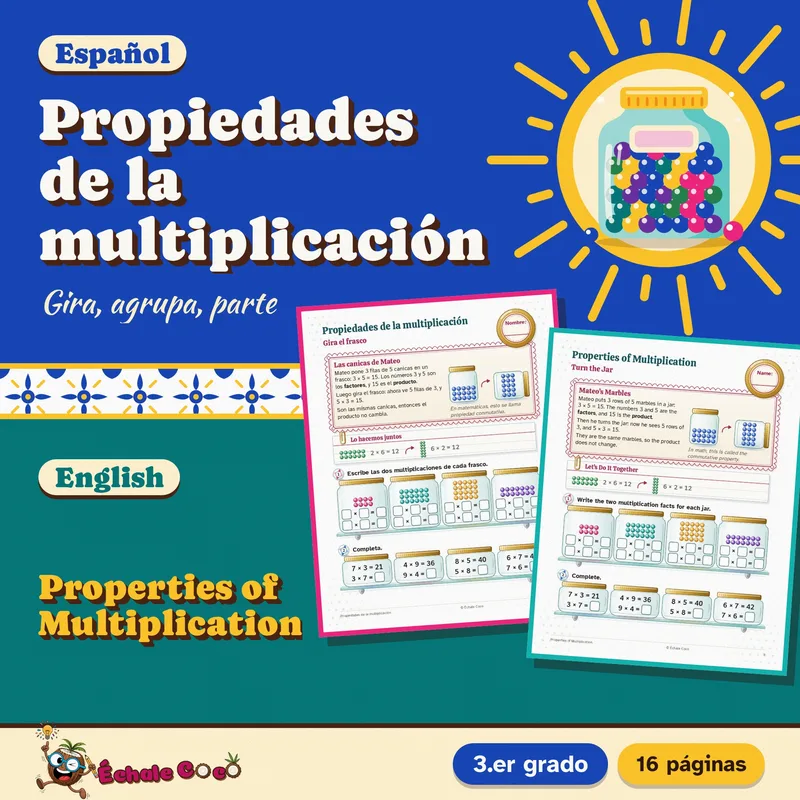
These are six practice pages on the properties of multiplication, with an answer key and teacher notes, and the same PDF includes complete Spanish and English versions on separate pages (16 pages in all). Everything happens on a shelf of marble jars: the marbles sit in rows and columns, and each strategy has a name students remember. “Turn the Jar” shows that 3 × 5 and 5 × 3 give the same product, “Group It Another Way” looks for the pair that makes 10 in 3 × 5 × 2, and “Split the Jar” puts a ribbon across the array, as in Ken’s lesson: “8 × 7 = (8 × 5) + (8 × 2) = 40 + 16 = 56.” The fifth page uses that same idea to divide, and the sixth mixes everything with a six-part challenge. Each page starts with a short lesson and an example solved in gray, so it works for a whole-class mini-lesson, for partner work, or as review homework. You can also hand out the English version on English-language days. Aligned to Common Core 3.OA.B.5.
PDF file to download and print.
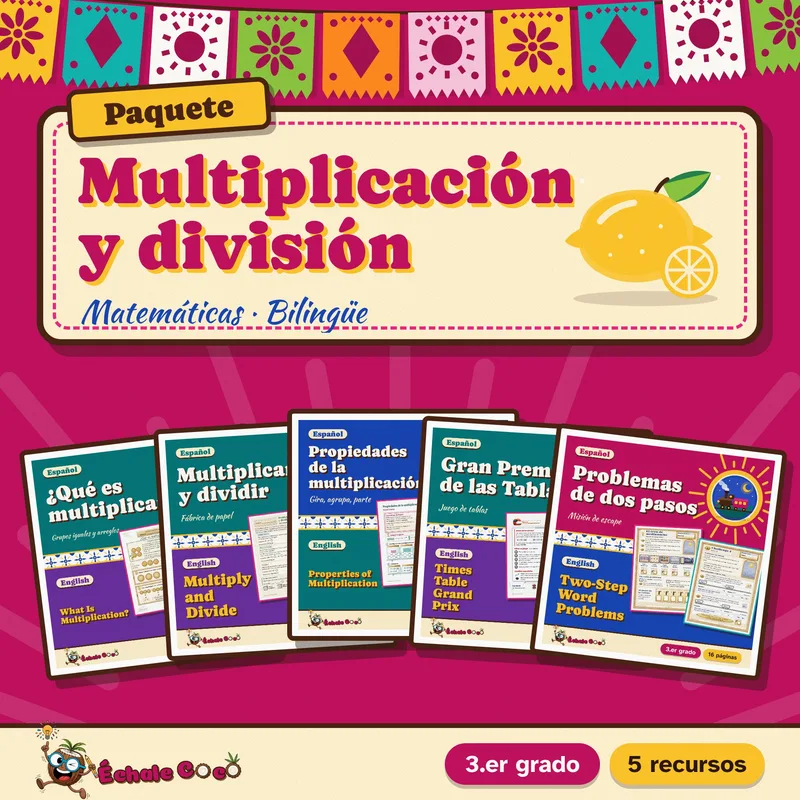
Complete the bundle
Multiplication and Division Bundle
This resource is part of a bundle. With the whole bundle you save $4.40.
The bundle also includes:
- Spanish Multiplication Equal Groups & Arrays
- Spanish Multiplication Division Word Problems
- Multiplication Fact Game
- Spanish Two-Step Word Problems Escape Room
$17.60 instead of $22.00
See the bundle
What is included
- A 16-page PDF, ready to print.
- The Spanish version and the complete English version.
- The answer key.
- Teacher notes.
- Aligned to 3.OA.B.5.
- Downloads as a PDF file.
Standards
- 3.OA.B.5 Common Core State Standards for Mathematics
Apply properties of operations as strategies to multiply and divide.2 Examples: If 6 × 4 = 24 is known, then 4 × 6 = 24 is also known. (Commutative property of multiplication.) 3 × 5 × 2 can be found by 3 × 5 = 15, then 15 × 2 = 30, or by 5 × 2 = 10, then 3 × 10 = 30. (Associative property of multiplication.) Knowing that 8 × 5 = 40 and 8 × 2 = 16, one can find 8 × 7 as 8 × (5 + 2) = (8 × 5) + (8 × 2) = 40 + 16 = 56. (Distributive property.)
The official text of each standard appears exactly as published.
Preview